
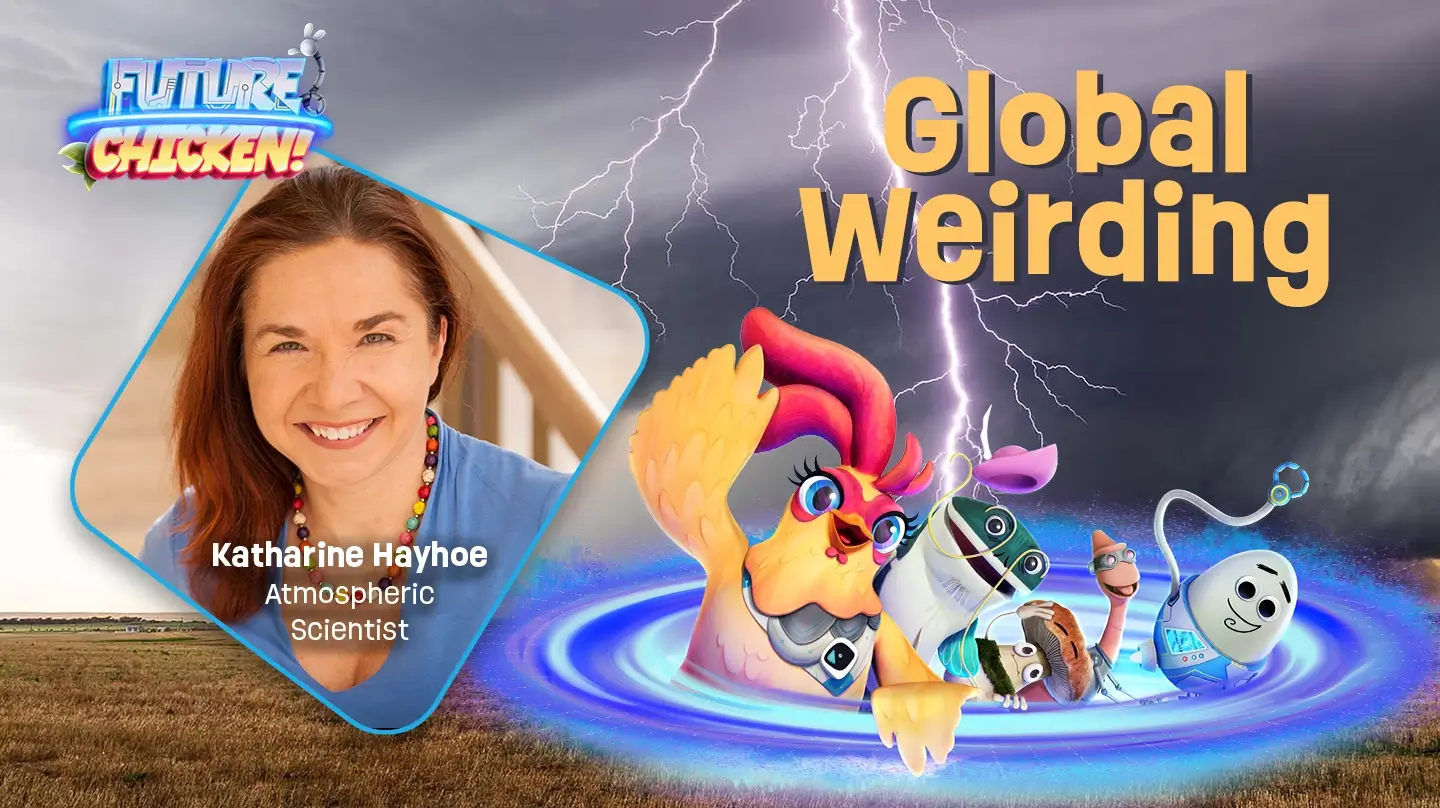
Encourage curiosity, critical thinking, and environmental awareness through interactive climate and weather activities inspired by a Future Chicken interview with Katharine Hayhoe, designed to help elementary-aged learners explore weather, climate change, and caring for the Earth.
Introduce children to the big ideas behind climate change, weather, and environmental stewardship through this engaging learning resource inspired by the Future Chicken interview with atmospheric scientist Katharine Hayhoe. Designed for parents, caregivers, and educators of children ages 6–11, this hands-on resource encourages curiosity, critical thinking, and meaningful conversations about how humans, animals, and the natural world are connected.
Using the Future Chicken video “Why This Scientist Calls It Global Weirding, Not Global Warming”, children will explore why weather patterns are changing, how human actions affect the planet, and what small actions we can take to help create a healthier future for all living things.
Watch the Video: Global Weirding with Katharine Hayhoe
In this episode, Future Chicken interviews renowned atmospheric scientist Katharine Hayhoe about weather, climate change, and why she uses the term “global weirding” instead of “global warming.” Through playful conversation and thoughtful questions, children learn how weather systems work, why the atmosphere matters, and how humans can make positive changes for the planet.
This climate change learning resource for elementary-aged children supports environmental education through inquiry-based learning, discussion prompts, and creative outdoor exploration.
What Children Will Learn
This learning resource helps children:
- Understand the connection between people, animals, plants, and the Earth
- Learn about weather, climate, and the atmosphere
- Explore how human actions affect the environment
- Build empathy for living things and the planet we share
- Practice observation, questioning, and critical thinking skills
- Discover small everyday actions that can help protect the Earth
Big Ideas for Environmental Learning
These guiding ideas help children connect climate science with everyday life:
- Everything on Earth is connected
- The Earth is home to humans, animals, plants, insects, rivers, and ecosystems that must be shared and protected
- Human actions can negatively affect the environment, but people can also make positive changes
- Small actions—like reducing waste, biking or walking, and caring for shared spaces—can help create a better future
Inquiry Questions for Children
Use these open-ended questions to spark discussion before or after watching the video:
- How are we connected to the Earth?
- Who do we share the planet with, and why does that matter?
- How do human actions affect the environment?
- How can communities work together for a healthier future?
These questions support inquiry-based learning and encourage children to think deeply about environmental responsibility, climate awareness, and community care.
Before Watching the Video
Prepare children for the video with these weather and climate discussion questions:
- What kinds of weather can you name?
- What does the word “weird” mean to you?
- What do you think “weird weather” means?
- Have you ever experienced unusual or unexpected weather?
- What do you think an atmospheric scientist studies?
These prompts activate prior knowledge and encourage children to make personal connections to weather and environmental changes.
After Watching the Video
Deepen understanding with these reflection and discussion questions:
- What is the atmosphere, and why is it important?
- Why do scientists study and monitor weather patterns?
- Why does Katharine Hayhoe describe weather as “changeable”?
- What does “global weirding” mean?
- How do human actions contribute to changes in weather patterns?
- What does it mean to share the Earth?
- What resources do humans and animals share?
- What small actions can we take to help the planet and each other?
These questions encourage children to think critically about climate science, environmental stewardship, and shared responsibility.
Hands-On Activity: Create a Wonder Wall
Outdoor Nature Observation Activity for Kids
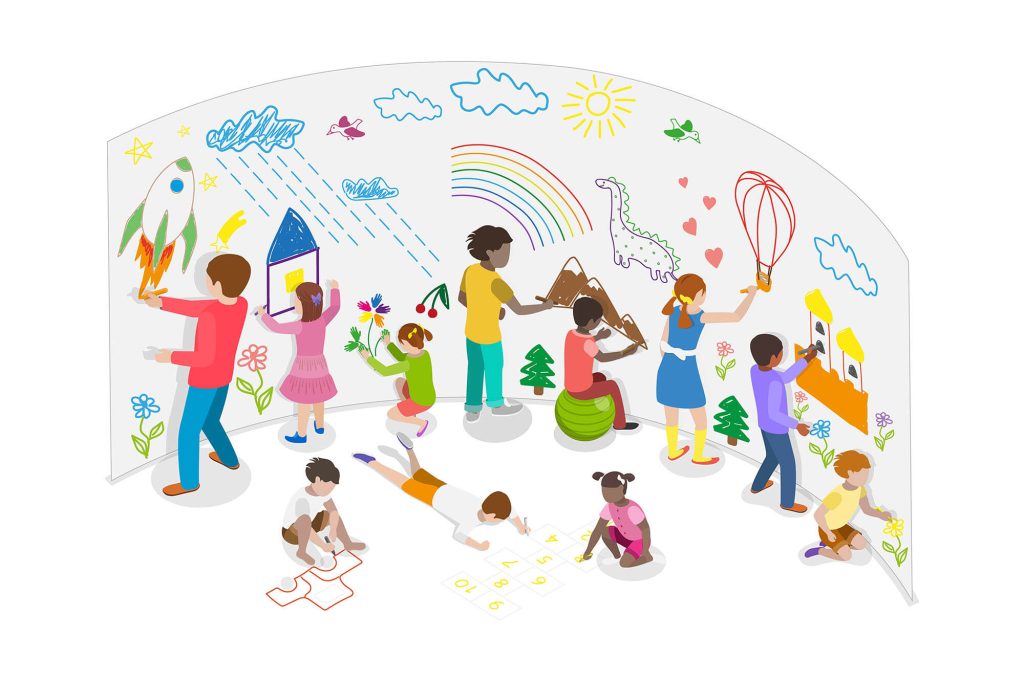
Encourage children to slow down, observe the natural world, and ask questions through this engaging outdoor learning activity.
Materials Needed
- A digital camera, tablet, or smartphone for taking photos
- OR clipboards, paper, crayons, or markers for drawing observations
Activity Instructions
Take children on a short outdoor nature walk around the schoolyard, neighbourhood, park, or playground.
Ask children:
- What do you notice?
- What do you wonder about?
- What living things can you find?
Children can document their observations by taking photos or drawing what they see.
After the walk, create a classroom or home “Wonder Wall” where children can post:
- Questions about nature and the environment
- Drawings or photos of plants, insects, trees, weather, or animals
- Observations about human impact on the environment
This flexible activity supports both younger and older learners.
Example Wonder Wall Questions
Younger children may ask:
- Where do puddles go?
- Why do leaves change colour?
- Which tree is my favourite and why?
Older children may wonder:
- Why does litter collect in certain places?
- How do humans affect local ecosystems?
- Why are weather patterns changing?
Bonus Weather Science Activity: Make Rain in a Jar 🌧️
Hands-On Weather Experiment for Kids
Help children explore how clouds and rain form with this simple weather science experiment. This engaging hands-on activity introduces children to basic weather and atmosphere concepts in a fun and visual way while encouraging curiosity about how weather systems work.
Materials Needed
- A clear glass jar or transparent cup
- Warm water
- Shaving cream
- Blue food colouring or watered-down blue paint
- A dropper, pipette, or spoon
Activity Instructions

- Fill the jar about three-quarters full with warm water. This represents the air in the atmosphere.
- Add a layer of shaving cream on top of the water to create a “cloud.”
- Slowly drip blue food colouring onto the shaving cream cloud.
- Watch as the colour begins to move through the shaving cream and fall into the water like rain.
As the cloud becomes heavier and more saturated, the “rain” falls through—just like real rain clouds in the atmosphere.
Questions to Explore Together
- What happened when the cloud became too full?
- How is this similar to real rain clouds?
- Why do clouds produce rain?
- What do you think happens during heavy storms or unusual weather events?
- How might changing weather patterns affect people, animals, and plants?
Extend the Learning
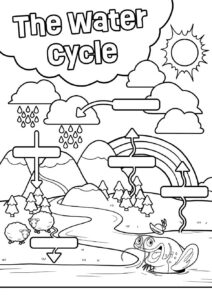
- Invite children to colour and label the water cycle.
- Experiment with adding more or less food colouring to compare light rain and heavy rain.
- Encourage children to make predictions before testing the experiment.
- Connect the activity back to the video discussion about “global weirding” and changing weather patterns.
This simple weather experiment helps children build an early understanding of clouds, precipitation, and the atmosphere through observation, prediction, and hands-on discovery.
Curriculum Connections
This environmental education resource supports cross-curricular learning for elementary students.
Science and Technology
- Understanding weather, climate, plants, water, and ecosystems
- Exploring how living things interact with their environments
- Observing patterns in nature and environmental changes
Language Arts
- Oral communication through discussion and sharing observations
- Writing reflections, labels, and questions for the Wonder Wall
- Reading and responding to peers’ observations
Media Literacy
- Using digital tools to document learning
- Creating visual representations through photos or drawings
- Sharing ideas collaboratively through classroom displays
Mathematics Extensions
- Create tally charts of observed plants, animals, or insects
- Compare sizes of leaves, sticks, or natural objects
- Practice sorting and categorizing observations
Home Learning Connections
Extend learning beyond the classroom by encouraging children to observe nature at home.
Invite children to:
- Look for living things around their home or neighbourhood
- Observe weather patterns throughout the week
- Talk with family members about ways to reduce waste and care for the environment
- Share their discoveries and questions with classmates or caregivers
These simple activities help children build lifelong habits of environmental awareness and curiosity.
Why this Climate Change Resource Matters
Children are naturally curious about the world around them. By introducing climate science through age-appropriate conversations, outdoor exploration, and inquiry-based learning, this resource helps children develop empathy, environmental awareness, and hope for the future.
Through Katharine Hayhoe’s accessible explanation of “global weirding,” children learn that while human actions can harm the environment, people also have the power to create positive change.This learning resource empowers children to ask questions, explore nature, and imagine ways to care for the planet together.


